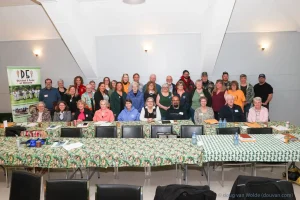
Guest Speaker Series | October 25, 2025 | Reported by the District 5 Fairs Web Team
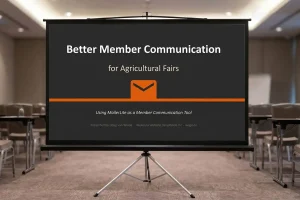
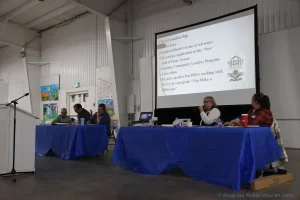
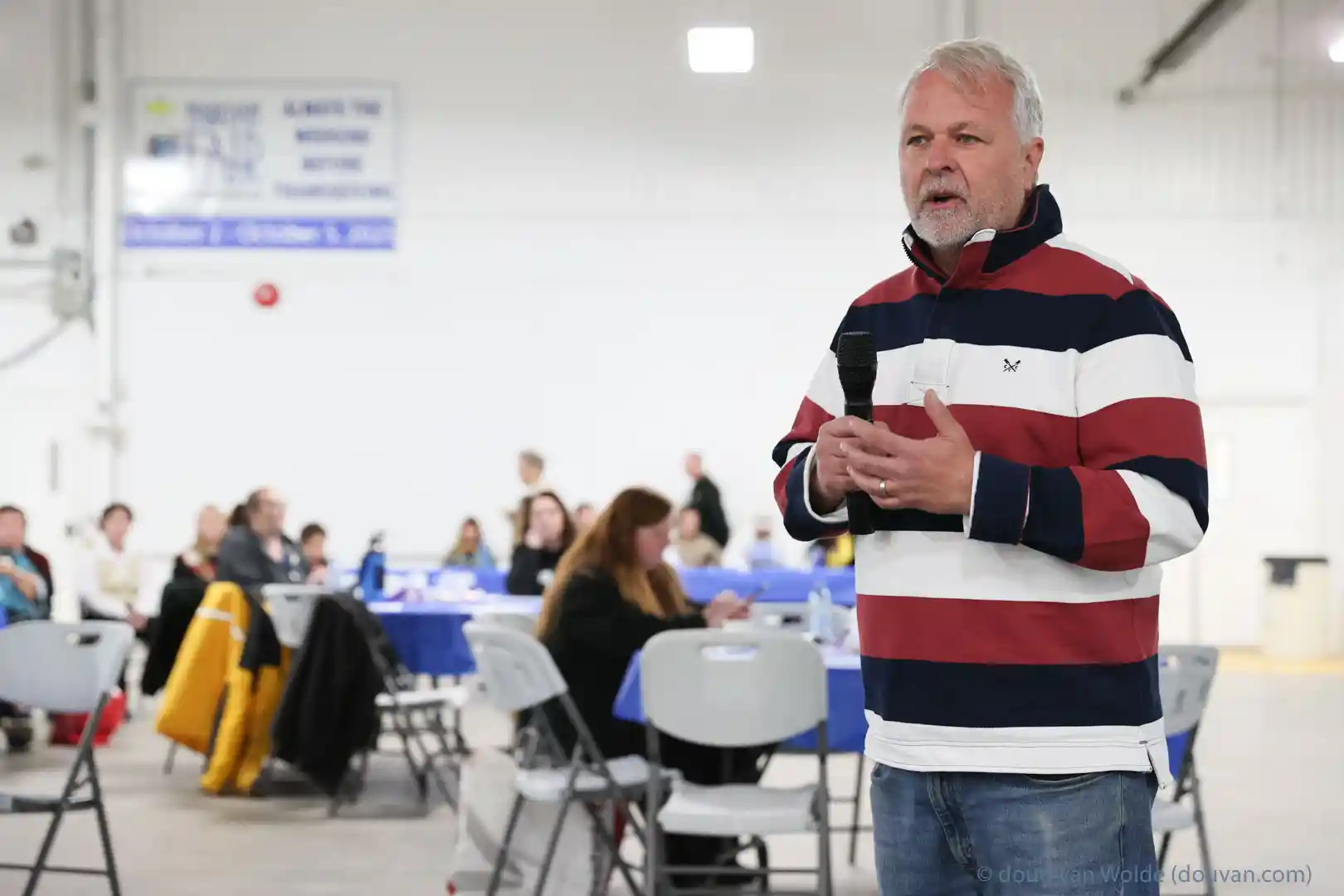
At our District 5 fall meeting on October 25, 2025, we had the pleasure of welcoming John Peco as our guest speaker. John served as Fair Manager of Markham Fair for many years, bringing professional leadership and vision to one of Ontario’s most well-known agricultural fairs. He also volunteers on the Agri-Food Tent Committee at Markham Fair — a role that keeps him closely connected to the fair community he clearly loves. We have the pleasure of connecting with John around fair time each year, and he continues to bring a wealth of knowledge, insight, and resources to everything he’s involved in.
John’s presentation challenged all of us — fair boards, volunteers, and community members alike — to think seriously about the future of our fairs. His talk wove together marketing strategy, community relevancy, and the spirit of innovation in a way that was both practical and inspiring. Here are the key ideas he shared.
Innovation Is What Separates Leaders from Followers
John opened with a quote from Steve Jobs: “Innovation distinguishes between a leader and a follower.” It was the perfect frame for everything that followed. Many of us in the fair community have done things the same way for a very long time — and there’s comfort in that. But John challenged us to ask: does staying the same mean we’ve stopped leading?
Innovation, he reminded us, doesn’t have to mean technology. It can mean improvement, advancement, modernization, or simply meeting a need that hasn’t been met yet. The real question is whether what we’re doing is still genuinely serving our community — or whether we’re putting on a party for ourselves.
Know Your Competition — It’s Bigger Than You Think
Fairs don’t just compete with other fairs. On any given day, a family choosing to attend your fair is also choosing not to go to the movies, go bowling, visit Toronto, or head to the CNE. That’s your real competition — the full spectrum of family entertainment.
John used the example of the Toronto Blue Jays. When the Jays are doing well, the entire country rallies behind them. Imagine, he said, if your community felt that same enthusiasm for your fair. That kind of relevance doesn’t just fill a gate — it strengthens your relationship with local politicians, police services, municipal funding, and community support at every level.
Points of Parity & Points of Difference
One of the most memorable frameworks John introduced was the Tim Hortons vs. Starbucks comparison. Both serve coffee. Both meet a basic need. But each has carved out a distinct identity through the experience they offer.
- Tim Hortons delivers on consistency, speed, value, and Canadian identity.
- Starbucks delivers on atmosphere, personalization, and destination appeal.
Neither is wrong — but each knows exactly what it is and delivers on that promise every time. John challenged every fair in the room to ask the same questions: What do our visitors expect when they arrive? And what makes our fair different from everything else competing for their time and money?
Those answers are your points of parity (what visitors expect as a baseline) and your points of difference (what makes you worth choosing). Understanding both is foundational to building a fair that grows.
Features vs. Benefits — Know What Your Visitors Actually Need
John used a simple but powerful illustration. He described a folding chair — lightweight, colourful, portable — and listed off all its great features. But if the person he’s selling to needs a chair with wheels due to a mobility issue, none of those features matter. The sale never happens, because the need was never met.
The same applies to our fairs. We can talk endlessly about our beautiful quilts, our livestock shows, our homecraft exhibits — and all of those things have real value. But not every visitor arrives with the need to see a quilt. The challenge is to understand who is walking through your gate and what they are looking for — then build your fair to meet those needs.
Universal Pain Points — Every Fair Faces the Same Challenges
Whether you’re a 100% volunteer operation like Blackstock Fair or a large organization like the CNE, John observed that every fair faces the same core challenges:
- Community relevancy — especially as populations grow and fewer residents have a connection to agriculture
- Expertise gaps — well-meaning volunteers who may not have all the specialized skills needed
- Limited finances — there is never enough money
- Aging infrastructure — facilities and systems that create operational constraints
- Crowd and traffic management — getting the right people to the right places at the right times
On infrastructure specifically, John offered a perspective shift worth remembering. Markham Fair operates on well water and uses composting toilets rather than a municipal sewage system. Rather than viewing that as a liability, he suggested reframing it entirely: Markham Fair operates one of the largest sustainable composting systems in North America. In a world where sustainability is increasingly top of mind, that’s not a weakness — it’s a point of difference.
The BHAG — Dream Bigger Than Your Constraints
John introduced the concept of the BHAG — Big Hairy Audacious Goal. It’s a term used in business strategy to describe a bold, long-range vision that pushes an organization beyond its current limitations.
The ask was simple: If none of your constraints existed — no budget pressures, no volunteer shortages, no resource limits — what could your fair truly become?
That vision, however distant it may feel, gives your board direction. It shifts the conversation from managing problems to building a future. And it starts with identifying your single biggest pain point and asking what it would look like to truly solve it.
The CNE Case Study — Data-Driven Innovation
John shared a compelling example from his work with the CNE, which welcomes approximately 1.4 million visitors annually. With ambitions to grow toward 2 to 5 million attendees as the GTA population expands, the CNE faced a real challenge: how do you add more people without making the experience worse?
The organization needed hard data on how visitors actually moved through the grounds. Using beacon technology and opt-in phone tracking, the CNE mapped the movement of thousands of attendees — where they went, how long they stayed, and which areas of the grounds were underused.
The results were eye-opening. It allowed the organization to settle internal disputes (such as tensions between food truck vendors and the food building), improve programming placement, and rethink the entire layout of the event. The key insight: even a world-class exhibit will be overlooked if it isn’t on a deliberate traffic path. That principle applies to every fair, regardless of size.
The Authentic Experience Is Your Greatest Strength
In a world of streaming services, augmented reality, and on-demand digital entertainment, John made a compelling case that fairs offer something genuinely irreplaceable — a real, live, tangible experience.
When someone rides a Ferris wheel, the wind is actually in their hair. When a child wins a prize at the midway, that moment is real. No screen can replicate it. In an increasingly digital world, that authenticity is not a limitation of what fairs are — it is their greatest competitive advantage.
Three Questions to Take Back to Your Board
John closed with a challenge for every fair represented in the room:
- What makes you different? Identify your points of difference and build on them deliberately. Add the wheels to the chair — meet the needs your visitors actually have.
- How are you relevant? Ask the hard question: If your fair ended tomorrow and never returned, who would miss it? The answer will tell you where your real value lies — and where to focus your energy.
- Who is your champion? Every fair needs a dreamer — someone who can see beyond the day-to-day constraints and inspire the board toward a long-term vision. If someone came to mind while reading this, reach out to them. Tell them you need them.
We are grateful to John Peco for sharing his time, experience, and insight with District 5. His perspective on innovation and community relevancy is a valuable reminder that the future of our fairs is something we actively build — together.
See the photo gallery of the 2025 District 5 AGM at Markham fairgrounds.
Reported by the District 5 Fairs Web Team. For more information about District 5 agricultural societies and upcoming events, visit district5fairs.ca